
The fear of pain stops more patients from getting dental implants than the cost does. Do dental implants hurt? During surgery, your mouth is fully numb, so you feel pressure but not pain. The soreness that follows peaks around 48 hours and clears for most patients within a week.
What often determines your comfort level is not the procedure alone, but how well you understand what to expect. When you know each stage in advance, the entire experience feels more predictable and less stressful.
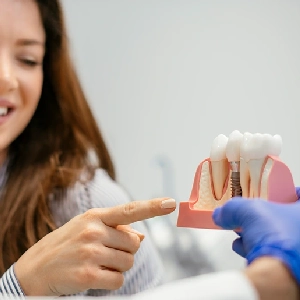
What Happens During the Dental Implant Procedure?
A dental implant is a small titanium post placed into your jawbone to replace a missing tooth root. The process moves in planned stages:
- Consultation and imaging – Your dentist takes 3D X-rays to assess bone density and plan precise implant placement.
- Implant placement surgery – A titanium post is surgically placed into the jawbone under local anesthesia. Sedation options are available for patients who experience anxiety.
- Osseointegration – Over the next few months, the implant fuses with your bone. This is a passive healing phase with no active discomfort. The same healing timeline applies to dental implants in York, PA and to Hybridge dental implants in York, PA.
- Abutment placement – A small connector piece is attached to the top of the implant post.
- Crown attachment – Your permanent, custom-made dental crown is secured to complete the restoration.
Each stage is carefully planned, and your dentist explains what comes next before treatment begins.
Are Dental Implants Painful During Surgery?
No. During the actual surgery, your mouth is fully numbed with local anesthesia. You feel pressure and movement, but not pain. Most patients report that the procedure is far less uncomfortable than they anticipated.
If dental anxiety is a concern, ask about sedation options. Nitrous oxide, oral sedation, or IV sedation can help keep you calm and relaxed throughout the appointment. A study published on the National Institutes of Health (NIH) found that implant placement caused less post-surgical pain than tooth extraction and led to fewer limitations on daily activities.
What Does Recovery Feel Like?
Recovery is where most patients have questions, and the answers are straightforward. The surgical site will be tender once the anesthesia wears off, but the discomfort follows a predictable pattern and responds well to standard pain management. Here is what many patients experience in the days following surgery:
- Mild to moderate soreness at the implant site, peaking within 24 to 48 hours
- Swelling around your jaw or cheek, subsiding within three to five days
- Minor bleeding at the surgical site during the first 24 hours
- Jaw stiffness, particularly if multiple implants were placed at the same visit
Most patients return to work and normal daily activities within one to three days.
How Do You Manage Pain After Implant Surgery?
Pain management after implant surgery follows a straightforward protocol. Most patients need nothing beyond what is listed below:
- Over-the-counter medications like ibuprofen or acetaminophen are effective for most patients.
- Prescription pain medication is used for more complex cases or patients with a lower pain threshold.
- Ice packs are applied every 20 minutes for the first 48 hours to reduce swelling.
- Soft foods such as yogurt, mashed potatoes, soup, and smoothies are recommended because they reduce pressure on the surgical site.
- Avoid smoking and drinking through a straw, as both can slow healing and disrupt the surgical site.
Most patients find that discomfort is well-controlled by day three and significantly reduced by day seven.
What Factors Affect Dental Implant Pain and Recovery?
Several factors directly influence your discomfort level and recovery timeline. Knowing them before surgery helps you prepare accurately:
- Number of implants placed: A full-mouth restoration involves more surgical sites than a single implant placement, leading to greater tissue disruption and a longer recovery window.
- Bone grafting: If your jawbone lacks the density needed to support an implant, bone grafting is performed first. This adds a healing phase before implant placement even begins.
- Your overall health: Smoking restricts blood flow to healing tissue. Uncontrolled diabetes slows the body’s ability to repair itself. Both increase recovery time and risk.
- Aftercare adherence: Taking medication as directed, eating soft foods, and avoiding smoking after surgery are important steps for smoother healing.
Patients choosing full mouth dental implants may have a more involved recovery than those receiving a single implant. Your dentist will provide a specific timeline and aftercare plan tailored to your treatment.
Warning Signs to Watch for After Dental Implant Surgery
Some soreness in the first few days is expected. The main concern is a recovery pattern that moves in the wrong direction. If you notice any of the following, contact your dentist the same day:
- Pain that gets worse rather than better after day three.
- Swelling that expands rather than reduces after 72 hours.
- A persistent bad taste or foul odor coming from the surgical site.
- Fever or chills.
- The implant feels loose or shifting in position.
These signs may point to infection or implant complications, both of which are easier to manage when caught early. Dental implants carry a success rate of around 95%. That number stays high because problems are rare and, when they do occur, patients who act quickly protect their results.
Are Dental Implants More Painful Than Other Tooth Replacement Options?
Patients often assume dental implants are the most uncomfortable tooth replacement option because they involve surgery. In reality, implants usually involve a short healing period, while bridges and dentures often come with ongoing sensitivity, soreness, or adjustment issues.
| Comparison Point | Dental Implants | Dental Bridges | Dentures |
| Procedure discomfort | Mild soreness for a few days after placement under local anesthesia | Requires reshaping healthy adjacent teeth, which may lead to sensitivity | No surgery, but fitting may cause initial gum soreness |
| Recovery period | Initial soreness usually improves within 3 to 7 days | Sensitivity may continue in the reshaped teeth | No surgical recovery, but adjustment may take several weeks |
| Long-term comfort | Designed to feel stable and comfortable once healed | May feel stable, but does not prevent jawbone loss in the missing tooth area | May cause sore spots, slipping, or gum irritation over time |
| Adjustments needed | Minimal once the final crown is placed and the bite is balanced | Replacement may be needed every 10 to 15 years | Refitting may be needed as the jaw shape changes |
| Feels like natural teeth | Yes, once fully restored | Partially | No |
Dental implants involve one main healing period. Bridges and dentures may avoid surgery, but they often require ongoing maintenance, adjustments, or adaptation over time.
Conclusion
Do dental implants hurt? During surgery, no. After surgery, there is manageable soreness for a few days. With local anesthesia, precise planning, and clear aftercare instructions, the procedure is far less painful than most patients expect. Dental implants have high long-term success rates, and for many patients, the temporary soreness is manageable compared with the benefit of a stable tooth replacement. At Sipes Dental, the team ensures every patient is fully informed and comfortable at every stage of the process.
Ready to Take the Next Step?
Schedule your free dental implant consultation at Sipes Dental in York, PA. Your visit includes a consultation, diagnostic 3D imaging, and a personalized treatment plan with the Sipes Dental team. Single implants start at $3,595, and flexible financing options are available.
Call us today at (717) 755-0244 or visit 2870 Carol Road, York, PA 17402, to book your appointment online today.
FAQs
How long does dental implant pain last?
Most patients experience soreness for three to five days after surgery. Swelling peaks around 48 hours and improves steadily from there. By the end of the first week, the majority of discomfort is gone. Full osseointegration takes several months, but that healing phase does not cause ongoing pain.
Is dental implant surgery painful without sedation?
Local anesthesia is always used during implant placement, so you do not feel pain even without sedation. Sedation is an additional option for patients who experience dental anxiety. Your dentist will review the best choice for your situation before the procedure begins.
What is the most painful part of getting a dental implant?
For most patients, the hours immediately after the anesthesia wears off are the most uncomfortable part of the process. This usually occurs during the 24- to 48-hour window after surgery. Taking pain medication before the numbness fully fades helps keep discomfort at a low, manageable level throughout recovery.